Tag from your roster with one press, or let MatchID do it — included in all plans. Start your 14-day free trial.Get Started →
GalleryID
GalleryID CloudGalleryID DesktopMatchID
PhotographersTeamAthletic DepartmentsColleges & UniversitiesAthletic ConferencesOrganizations
HelpComparePricingBlogAbout
Book a DemoLog InTry 14 Days Free ›
GalleryID CloudGalleryID Desktop
Help home

Start here

How GalleryID Desktop works

Getting started and ingest

Set your MatchID settings and metadata templateIngest from a card

MatchID

Index reference headshotsTag photos with MatchIDTurn camera voice memos into names

CaptionID

Set a roster on a folderTag photos from a roster with CaptionID

Metadata

Build an IPTC template with tokensFix a wrong value across a folder

Culling and editing

Cull out-of-focus photosCrop and straightenAdjust exposure, colour and tone

Files and delivery

Copy, move and rename filesWatermark, sharpen and exportSend named files over FTPSend photos to GalleryID Cloud

Archive and backup

Browse an unplugged drive with CatalogBack up and restore

Reference

Keyboard shortcutsActivate a computer and manage devices

More

TutorialsContact supportYour Desktop account
Desktop help›Reference›Activate a computer and manage devices

License

Activate a computer.

GalleryID Desktop is licensed per computer. Your subscription includes a device cap (1 base plus add-ons). Activate each Mac or Windows PC with the license key from your account email.

  1. Launch GalleryID Desktop. First run shows the activation screen.
  2. Paste your license key (UUID format). It came in the email from when you subscribed.
  3. Name this computer, something you'll recognize in a device list later, like “Studio iMac” or “Field laptop.”
  4. Click Activate. The app unlocks on the Browse tab.

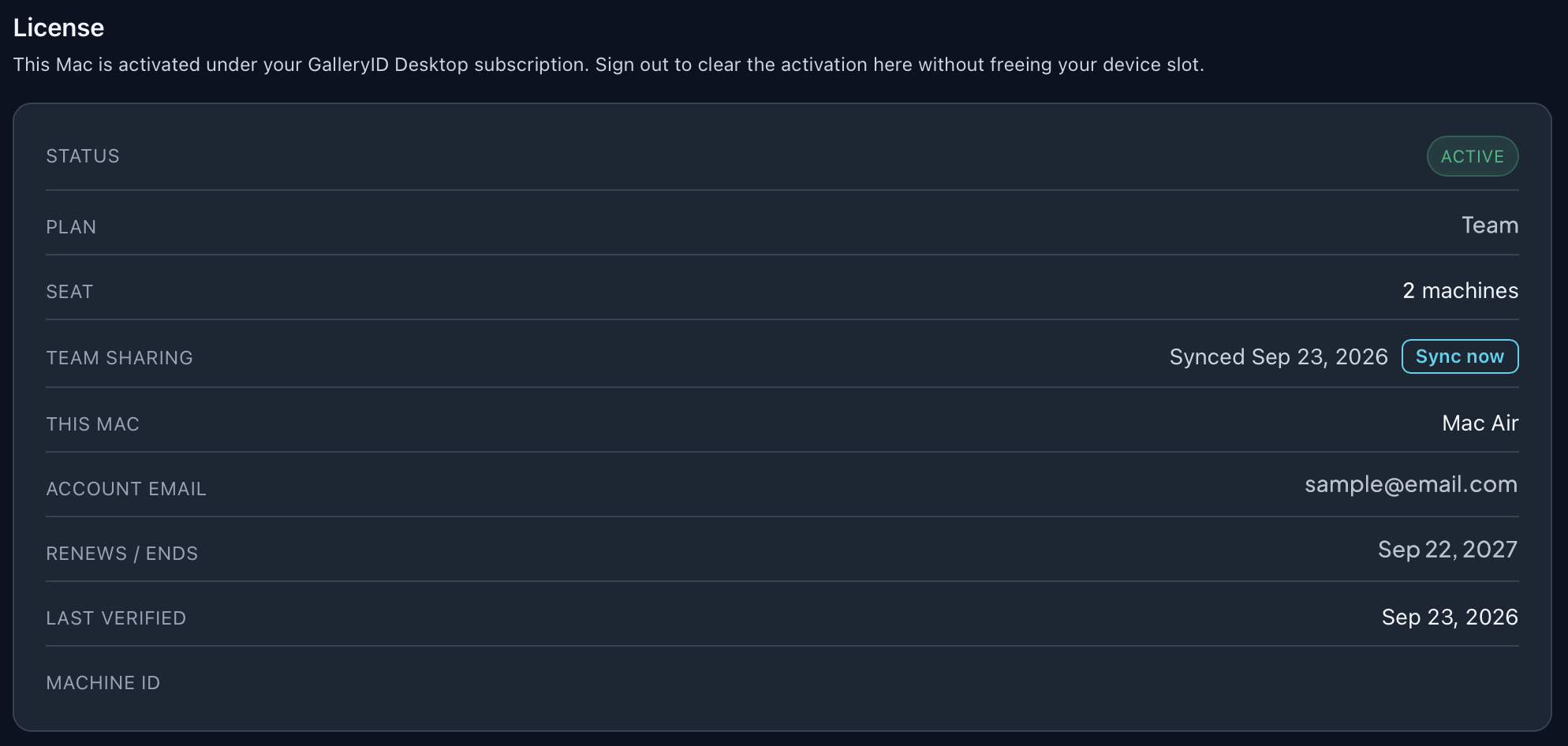
Settings ▸ License shows your plan, device slot usage, account email, and the name you gave this computer. The Deactivate button clears the activation locally, which is useful when handing the computer to someone else who'll paste their own key. Deactivate does not free your device slot; the slot stays reserved, and pasting the same key back in re-activates without using a new one.

To free a device slot, sign in to galleryid.ai/desktop/account with the email on your subscription. The Devices page lists each computer you've activated and lets you revoke any of them. Revoking from the web rather than the local app prevents teammates who share a license key from kicking each other off.

To buy more devices, add them anytime from your account. Pricing is per device on top of the base subscription. The new cap takes effect immediately, so paste the same license key on the next computer to activate it.

GalleryID

Athlete naming for sports photographers and athletic departments. GalleryID Desktop ingests, culls and captions on your own computer — nothing is uploaded. GalleryID Cloud is the hosted archive you search by athlete name. The built-in Roster Library ships 18,815 team rosters and 474,304 athletes across NCAA Division I, II and III and the major US pro leagues.

Your archive knows who’s in it.

GalleryID Cloud on the go

Download GalleryID on the App StoreGet GalleryID on Google Play

Product

GalleryID DesktopGalleryID CloudMatchIDFeaturesPricingCompare

Solutions

Sports PhotographersTeamAthletic DepartmentsColleges & UniversitiesAthletic ConferencesOrganizations

Company

Book a 30-Min DemoAboutContactPrivacyTermsDPA

Resources

HelpGetting StartedDesktop Getting StartedCaptioning SoftwareRoster LibraryBlog
© 2026 GalleryID. All rights reserved.macOS, Windows and the web.

Photo Mechanic and Photo Mechanic Plus are trademarks of Camera Bits, Inc. Lightroom, Photoshop and Adobe are trademarks of Adobe Inc. Capture One is a trademark of Capture One A/S. Sideline Captions, Caption Pro, PhotoShelter, SmugMug, Zenfolio, Pixieset, Pic-Time and all other product and company names referenced on this site are trademarks of their respective owners. GalleryID is not affiliated with, sponsored by, or endorsed by any of them. Those names are used here only to identify the products being described or compared, and any comparison reflects each vendor’s published documentation at the time of writing.